

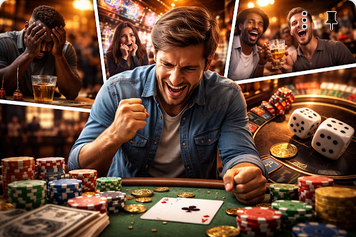
After all, we are all aware that it is arbitrary. Phrases like “It’s luck,” “The odds are fixed,” and “The house always wins” are common. But gambling is not random to us.
They feel involved.
Someone may open a 20Bet login casually, place a wager that doesn’t cost much, and still feel annoyed, proud, nervous, or strangely confident afterward. This doesn’t add up if gambling is just numbers. But it happens constantly.
That’s because gambling hits the brain in places logic doesn’t control very well.
The Brain Hates Not Knowing Why Things Happen
One thing humans are terrible at is accepting randomness. Although we claim to accept it, in our minds we don’t. The brain searches for a reason as soon as something occurs.
If a bet wins, the brain says, “See? That made sense.” If it loses, the brain says, “Something went wrong.”
Very rarely does it say, “Nothing caused this.”
That’s uncomfortable. So instead, people invent explanations. Bad timing. Bad luck. Almost right. One small mistake. Anything but “this was meaningless.”
Gambling exposes that instinct very clearly.
Why Choosing Feels So Important
A big psychological trick in gambling is choice. Even when choice doesn’t change the outcome much, it changes how the outcome feels.
Picking a team. Picking numbers. Deciding when to bet. These small actions give the feeling of agency. And once someone feels responsible for a decision, the result becomes personal.
Winning feels earned. Losing feels irritating. Sometimes embarrassing.
That’s not because the person is irrational. It’s because responsibility activates ego, whether we want it to or not.
Near Wins Are Worse Than Clean Losses
Ask most gamblers what they remember most, and it’s usually not big wins or big losses. It’s the ones that almost worked.
The last-minute goal that didn’t happen. The final card that ruined everything. The number that was one digit away.
Those moments stick. They feel unfinished. In terms of psychology, the brain views them as “nearly success,” which is highly motivating. Even if there has been no statistically significant change, it creates the impression that you are approaching.
That’s why near wins can keep people engaged longer than actual wins.
Time Gets Weird When You’re Waiting for an Outcome
People often say they “lost track of time” while gambling. It’s not overstated. Anticipation does strange things to attention.
When you’re waiting for a result, the brain stays alert. The next outcome always feels just seconds away. The thought “Okay, we’re done now” does not naturally occur.
Because of this, gambling sessions can go longer than planned without feeling drained right away. Fatigue comes later.
Losses Linger More Than Wins
A win feels good, but usually not for long. A loss sticks around.
Losses are more painful psychologically than wins of comparable magnitude. That imbalance creates pressure. Not necessarily pressure to win big—but pressure to fix the feeling.
That’s where chasing comes from. Not stupidity. Not greed. Just discomfort.
Gambling occasionally offers emotional closure, although it is not always able to fulfill this desire.
Memory Is Not on Your Side
Most people remember gambling outcomes inaccurately. Wins feel sharper. Losses blur together. This eventually results in a narrative that isn’t entirely accurate.
Even if they are, a person may genuinely think they are “not doing that poorly.” The brain edits the past to protect confidence.
This isn’t unique to gambling. Gambling just makes it obvious.
Gambling Changes Around Other People
People take more risks when others are around. That’s true in life, and it’s true in gambling.
In groups, risk feels lighter. Loss feels shared. Winning feels social. Online spaces recreate this through comments, shared wins, and visible activity.
Even silently seeing others succeed can shift behavior. Suddenly, a bet feels more normal, less dangerous.
When Gambling Stops Being Just a Game
At some point, gambling can stop being entertainment and turn into a quiet test. A test of instinct. Of intelligence. Of nerve.
Things become awkward at that point.
When the outcomes start to feel like condemnations, gambling becomes emotionally draining. Wins feel validating. Losses feel personal. And randomness starts to feel unfair instead of neutral.
That’s usually the moment enjoyment starts fading.
The People Who Handle Gambling Best
The people who seem healthiest around gambling aren’t the smartest or luckiest. They’re the ones who don’t read meaning into outcomes.
They don’t treat wins as proof. They don’t treat losses as failure.
They keep emotional distance. And ironically, that distance makes the experience calmer and more enjoyable.
Why This Stuff Actually Matters
Understanding the psychology behind gambling doesn’t kill the fun. It explains it.
It clarifies why gambling may be thrilling at times and exhausting at others. Why minor wagers can elicit strong feelings. Why do people behave differently than they expect themselves to?
Most problems don’t start with gambling. They start with a misunderstanding of how the mind reacts to uncertainty.
Final Thought
Gambling is more than just a random game. People repeatedly engage in this mental experiment, frequently without recognizing it.
The outcomes may be random, but the feelings aren’t. Once you see this clearly, gambling becomes easier to approach honestly. You can also step away when it stops giving anything back.
