

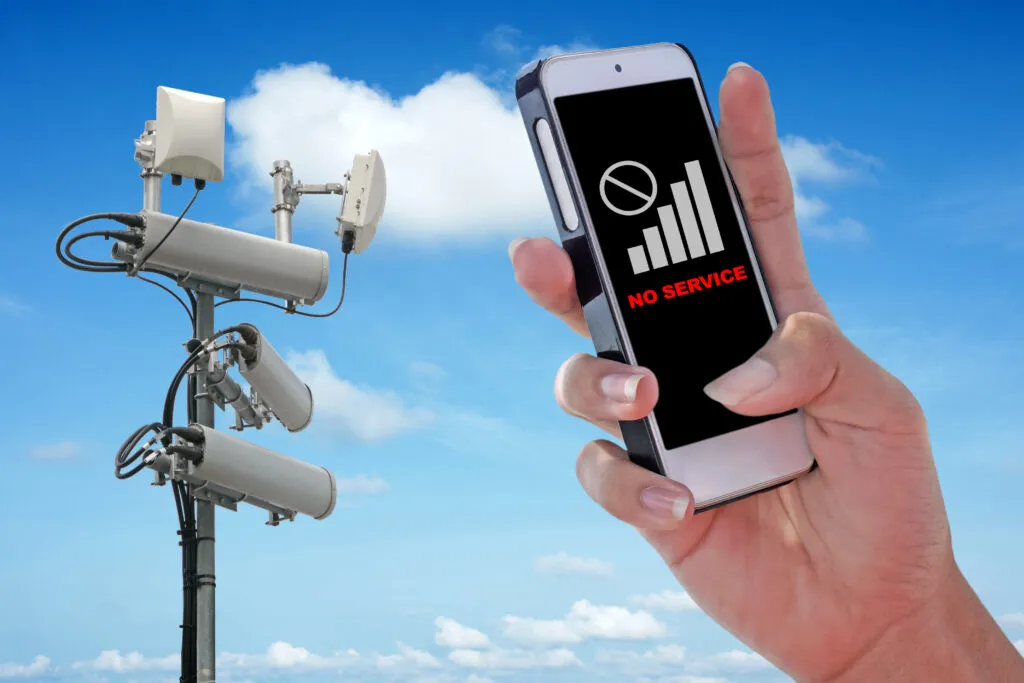
Universities are some of the most active places you’ll ever come across and with tonnes of students and personnel present, good mobile reception is crucial. As such, when problems with mobile signal in university campus or specific buildings arise, they have to be resolved quickly. Fortunately, a few solutions are available with mobile signal boosters proving to be the most effective according to UCtel.
So let’s look at what boosters are, see how the technology handles problems with mobile signals in university settings. In addition to this, you’ll gain knowledge concerning the installation process, which will give more insight into the subject.
Mobile signal challenges universities face
A standard academic institution is a large space filled with multiple buildings, some of which have several levels including basement auditoriums and other spaces. Also, they’re attended by literally thousands of students and are built in places that vary in landscape and climate. The above statements have given some hint as to what the problems with mobile signals in universities are. The following is a detailed look into these as well as other network problems that these institutions faces:
Fickle weather
This is an issue that is probably the most unpredictable on this list. Which means that when there is heavy rain, snow or thick cloud cover, the signal from the towers oftentimes won’t be strong enough to penetrate and reach users.
Surpass of mobile users
The signal quality gradually becomes poorer with an increasing number of users on the network. This accurately depicts the situation in academic institutions, where thousands of individuals rely on the favourite local network for research and essential communication throughout the day.
Nature of the university structure
Irrespective of whether a building is modern or not, how it’s built and what it’s made of plays a major role in how good reception will be. This is actually one of the more prevalent problems with mobile signals in university setups. There are many building materials that hinder signal strength and these include the likes of the following:
- insulation between walls
- metal
- thick concrete
- brick
- stone
Presence of underground facilities
It’s quite common knowledge that basements and underground car parks have either weak or non-existent signal strength. As such, it’s clear to see that facilities such as underground auditoriums would face the same.
Topography of area
The landscape of a place also influences how mobile devices will receive signals. Areas with tall mountains, hills and lots of big trees tend to have weak networks because any of these obstacles can be seen as obstacles.
How signal boosters solve the issue
Mobile signal boosters are devices that strengthen incoming signals from base stations. Most would consider them as the primary tool to use when trying to improve the signal for any place. They are incredibly versatile and are easy to install, which is why they are quite sought after. In addition to this, they often cover multiple networks, which is perfect for places with a high number of mobile users.
A lot of what makes them so popular is the fact that they can fit just about every type of building you can imagine. This is owing to the fact that they consist of three parts that help with signal enhancement. These include the following:
- the external antenna, which is fixed on a high point outside,
- the amplifier, which is placed inside in the place that requires the most help and is connected to the external antenna with a coaxial cable,
- the interior antenna, which distributes the amplified signal throughout the place.
You should also note that one interior antenna won’t always be enough, especially if you’re talking about thousands of students. Fortunately, the booster setup usually allows for multiple internal antennas to be connected to the amplifier and spread out to cover more ground.
With this layout, academic institutions can receive the best of what’s accessible and amplify it tenfold. In doing this, any problems with mobile signals in university facilities and spaces are almost immediately curbed and access to users is easy. The only way this wouldn’t work is if there was an issue at the source station or tower.
Why this technology is important to universities
This technology, as you’ve seen, makes things a lot easier for those who use it, especially when any of the above factors play a role in bad connections. In academic institutions, internet and telecommunication services are used for research and communication purposes. The last thing you want is faulty signal reception, as it affects the following:
The learning experience
Institutions such as these are built so that students and members of the faculty can conduct research as well as interact seamlessly. This is only achieved if the place experiences good reception consistently, something that the technology in question does. Without it, there’s no consistency and interruption are more likely to occur.
Emergency response
In case of serious medical or criminal incidents, it’s important to swiftly contact the relevant authorities. If there’s any delay, situations may escalate to a point in which they can’t be salvaged. Boosters help as they ensure that the signal is strong enough for these rapid responses.
Overall communication
Whether it’s between students, faculty members and employees or just with the greater world in general, swift communication is highly important. This mainly due to the fact that it’s one thing that shouldn’t be stressed over.
Final thoughts
The complexity of the academic institutions layout, as you’ve seen, gives us more than an idea concerning what could cause bad signal strength. Boosters are fortunately a piece of technology that aids when it comes to issues with mobile signals in university spaces. Their installation procedure in particular makes them a prime choice as it requires relatively little.
They are also built to take on any building type or establishment including malls and hospitals, which gives them more points in versatility. All that’s needed for the boosters to be operational and for you to reap the rewards is an experienced partner that can gauge the university, give advice, and handle the installation.
